

#02: Sam Elliott's Creative Practice
On hanging over the abyss, writing amid distraction, and ridiculous word counts.

Welcome to the second issue of Creative Practice! This week we are hearing from Sam Elliott, author of the outback noir Haze.
I loved reading about Sam’s ‘terrible’ process (his words). Before I wrote my novel, I spent a lot of time thinking about writing, studying the routines of writers as though that would unlock the secret to being able to balance work, family, and all the other obligations that creep into life. It was only when I read Oliver Burkeman’s Four Thousand Weeks that I realised no amount of optimisation or productivity hacks would give me the time to write; I had to make that time myself rather than wait for the perfect conditions to magically appear. Sam’s process is a reminder that writing can, and must, be done in whatever way it can. There is no ideal, only practice and a commitment to showing up to the page.
Also—and I hope Sam doesn’t mind me saying this!—Sam is a personal inspiration for his perseverance with writing after many years rejection. At the launch of Haze, Sam spoke about how he admired the protagonist in his novel, Dahlia, a cop who keeps going back into danger, into places she isn’t welcome. Sam said he wished he had Dahlia’s strength and single-mindedness to keep pursuing what was right despite all the obstacles thrown her way. I felt like shouting from the audience, ‘But Sam! Dahlia is you!’
I hope you enjoy reading Sam’s creative practice.
Sam Elliott’s Creative Practice
I wouldn’t wish my process on anyone, but it works for me, I just have to come to accept that there’s going to be a lot of hardship and suffering to get to that point.
What are your favourite tools?
Sadly, I'm boring - in that, I don't have any favourite tools. I have my trusty laptop, a couple of them that I alternate between, depending upon where I am in the world and what I'm doing - and I'm one of those folks who will jot down little notes into their phone as soon as inspiration strikes when out and about. I do like the idea of having a special tool to make the magic happen - but I don't have one - and I'm probably more fortunate that way, otherwise I might not ever get any work done!
Do you have any rituals for your creative practice?
I do all the things you're not supposed to do. I'm enveloped by distraction the whole time I write. Phone close at hand. Computer with internet and socials there to tempt me. Terrible set up - my work desk is out in the living room which doubles as my cat's domain. But, the work gets done, writing happens. I won't say good writing at the start, but the writing does come and I dedicate however long it takes to making it the best I can be.
I think I'm lucky in being able to work in such a way, surrounded by chaos. I attribute being able to do that because of the years I spent writing novels, by hand in exercise books, in food courts of shopping centres. I liken myself to a little weed that can grow through the cracks of any urban jungle, without proper sunlight or water. Or maybe one of those little fighting fish that live in a thimbleful of muddy water.
My only ritual is showing up and getting the words down - knowing I'll need to revisit them so many times before they are remotely worthy of someone else looking at them.
What do you listen to while you write?
I used to always listen to music, and my musical tastes are … not to everyone's liking. They're a playlist that I alone can enjoy, but anyone else would consider the most heinous torture. Katy Perry one track, then Cannibal Corpse - no exaggeration - and it probably goes downhill from there.
I do listen to a lot of Hans Zimmer and (completely different to Zimmer) NIN, Dragged Into Sunlight, Bismuth, Vile Creature, Amenra. Cannibal Corpse is my favourite metal band, but I listen to a lot of a subgenre called funeral or sludge metal - which goes for a long time, building. It's not to everyone's tastes obviously, but it works wonders for me. Also got some Gregorian chanting and classical thrown in there too. Sky truly is the limit with my tastes and what works for me in the moment.
Some of the time, I don't even have music going, no need - I'm so absorbed in what I'm doing, or trying to do, that a zombie apocalypse could probably unfold around me and I'd be none the wiser.
When do you usually write? Do you set a target (either word count or length of time)?
I'm not a morning person, but I get a ton done in the morning and I continue, whenever I can, throughout the day, in inspired fits and bursts. I write a ton, my daily word counts average 2,500, at least (that's the minimum I'll accept) - but can go up to 4-5-6,000 words. [SS note: 🤯] That's when I'm just working on writing a first draft.
When I'm editing a novel, such as I'm doing now, I'll work on that throughout most of the day - and then I'm writing the first draft of another novel in the latter part of the day. I'm more forgiving with word counts on that, because it is the tail end of the day and, so long as I'm getting something down and progress is being made, I'm a happy camper.
My word count is huge, but that means I have to scrap a lot. I'm writing a ton, knowing that most, if not almost all of it, will go. For example, right now, I'm editing book two of my novel featuring the character/cop from Haze, my published first novel. This book two started its life at 270,000 words - that's not an exaggerated, random number, that's what it was. And now I'm trying to get that down to a much more god-fearing and normal size, i.e. as close to a 100,000 as possible. So, pray for me.
So long as you're writing in any way, or even thinking about it when you're not, I feel like you're making progress.
How do you write?
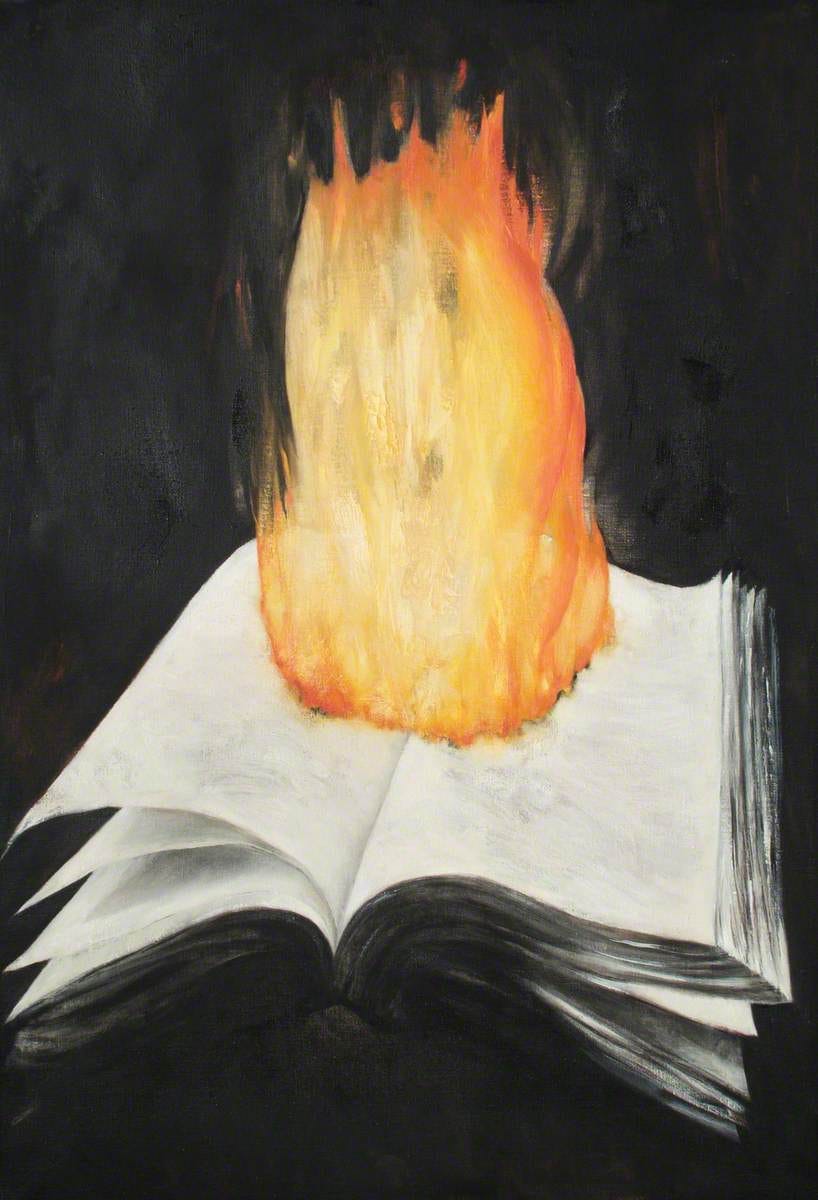
I've coined this term (I think) 'hanging over the abyss' - what it means, for me, is I sit down and become the conduit for the words to flow, with no real control over them. It's the wildest state of being and the closest that I'll likely ever get to a religious or spiritual episode. In a way, it is just that, because I am completely entrusting whatever comes from that ineffable, liminal space or segment in my brain, this 'imagination' - to tell the story in its way. It's only later on that I'll go back and edit the words and try making them into something another human can understand and, fingers firmly crossed, maybe even enjoy.
Because of the way I do that, surrender myself to the higher power of that, it means that I produce insanely sized manuscripts, such as Deepfake mentioned before which came to 270,000 words - then the real work can begin. So I do write in a linear fashion, beginning, middle, end. I just get it out and get it down first, no editing during - then the real work can begin.
In my experience, it takes 6 or 7 drafts before it resembles anything remotely like a novel. The first few drafts, little will change and the despair will grow, feeling like I'll never get a handle on it and I'll certainly never get the word count down. But, without fail, that changes over time and drafts. I start to be able to cut huge swathes, cut it to (my definition of) the Carver-esque bare bones of the story.
I wouldn't wish my process on anyone, but it works for me, I just have to come to accept that there's going to be a lot of hardship and suffering to get to that point.
Where do you find the most pleasure or joy in your creative practice?
Even though I mentioned above that I'm not really in control of that free-flow state where the words are just coming out and I'm just the conduit, a part of me is in a cinema in the back of my head, watching and enjoying seeing the story taking shape, taking unexpected turns. I never know what's going to happen and I'm thrilled when something unexpected does, which is often the case. There's great joy to be found in that.
There's also great joy to be found in when, down the line, after however many drafts, you start to notice the novel taking shape - that you aren't needing to cut so much out, that the words that are on the page are starting to stand on their own accord and stand up against your own brutal scrutiny. That comes with the understanding that - although a novel is never going to be finished and it'll never be perfect - it's coming to a point where you'll be able to release it out into the world soon enough. You've nurtured that baby bird with the broken wing back to health and the bittersweet time is fast approaching when you'll be releasing them back into the air. You've done the thing, the huge, oftentimes despairingly hard and brutal thing to do - which is, as a writer, one of the main reasons you've been put on this earth.
There's such joy in that, in a moment, shared with no one but yourself, knowing that that is the moment you're at, experiencing. Just wonderful.
Do you have a favourite piece of writing advice or guiding principles that drive your work?
Treat it exactly like a job. You've got to show up at a certain time, sit down at your desk and do the thing. Failure to do that is going to swiftly result in you having a godawful meeting with People and Culture. You don't want that. No one wants that. So do your job, to the best of your abilities. Don't take yourself too seriously, but do take your writing seriously.
Also, be kind to yourself with all of it. Accept that the demon of self-doubt sitting on your shoulder, whispering awful, cruel and demoralising things in your ear, will always be there, and they're never going to away and you wouldn't want them to either. They're keeping you scared that your writing isn't good enough - that's a great thing. It means that you're willing to revisit the same words you've seen so many times, that you've come to hate, because you're determined to do the impossible - make them perfect. That demon of self-doubt is ensuring that you will never accept the bare min and the good enough. Their existence is proof that you're a true writer - destined to produce the best and truest work you possibly can.
What do you do when you get stuck? How do you fill your creative cup?
Walk away, think of something else. Be kind to yourself. It will come - it will come like all other thoughts, when your mind is consumed with other thoughts. Re-read what you've done, pretend that it's someone else's novel, view it in that detached, objective fashion, jot down some notes to go with it. You will be astonished with how much this proves to be the most fertile soil for your imagination's flowers to blossom.
And always read.
Read writers that blow you away with their brilliance. Ask yourself, what did they do there? How did they do it? You'll come away with a new framework and outlook and, by then, you've been so delightfully distracted with gorging on such masterful writing, that you'll probably find you've got a whole bunch of new ideas about your own work too. It's like intermittently checking your emails, or finally not watching that kettle and hearing it start to boil.
What (non-craft) book taught you the most about writing?
It's a toss up between Stephen King's IT and Clive Barker's Coldheart Canyon. The former, I first read when I was about eight or nine years old - read to the best of my abilities (relax, I turned out ok) - the latter, I read when I was maybe 12-13. Both of them showed me a masterful writer, running headlong into the endless tunnel of their imagination - come what may from that. I'd always loved horror, I was a child scared by a lot - and I've grown into a man who is now writing novels about what truly scares him. Not of nightmarish monsties, but real world terrors. Both those novels, those writers, showed me that you should embrace your imagination, even if, or perhaps especially because, it terrifies you.
If you could save one book from your shelves, what would it be?
I adore Shuggie Bain by Douglas Stuart. I've bought it for so many people and banged on about it to those I haven't. Such an uplifting, life-affirming story, despite its almost entirely unrelentingly bleak setting and story. The glimmers of hope, of humanity, in that tale, are like rays of sunshine poking prevailing through the most evil of stormclouds. Read it, if you haven't already. You gotta.
Thank you so much, Sam! I am blown away by your word counts and your dedication to writing amid distraction. There is so much joy and energy in your creative practice, although as a certified Scaredy-Cat, I might leave the horror novels to you 😉.
I’m curious if anyone can top Sam’s daily word counts … ?!
Wow guys this is amazing!!
Loved this one!! So good, Sam (and Sophie!! 🤗) 👌🔥✨